
“The resi world’s very tick-a-box, whereas the commercial world has a lot of relationship component that comes into it”
Petro Trianta, Podium Money

“Real transactions can be very different … I think [the experience of] seeing scenarios and transactions ... probably does outweigh any entry-level education”
Chris Hall, Blue Crane Capital

“One of the challenges that new entrants face in the commercial world is just lack of product knowledge, with commercial product offerings in the market growing and increasingly complex”
Domenic Lo Surdo, Stamford Capital

“Given our need for housing here in Australia, we need to be mindful of the impact of any additional regulation that materially disrupts or hampers private credit’s ability to navigate financial markets”
Jeremy Enconniere,�La Trobe Financial

In Partnership with

The difference between pool and snooker
Commercial finance may look like another cue off the same break, but veterans say it’s more snooker than pool – strategic, unforgiving and mastered only through experience
Read on


Cory Bannister
La Trobe Financial

Jeremy Enconniere
La Trobe Financial

Jean-Pierre Gortan
Simplicity Loans & Advisory
Chris Hall
Blue Crane Capital

Industry experts
THE COMMERCIAL LENDING space is experiencing something of a gold rush moment. Brokers are being encouraged from all quarters to diversify their income streams, private credit is expanding rapidly, and Australia’s housing crisis demands solutions that commercial finance can provide.
Industry leaders welcome the growth but warn that commercial finance is not simply another product line – it’s a different game entirely. In a market defined by intricate deal structures, regulatory scrutiny and expanding private credit, success depends on experience, education and sound judgement.
Recently, Cory Bannister, senior vice president and chief lending officer at La Trobe Financial, and Jeremy Enconniere, the company’s head of commercial partnerships, sat down with Australian Broker at Cafe Sydney along with a group of commercial mortgage brokers and financial service experts. Over lunch, they explored how the sector’s growth conceals a steep learning curve, why expertise is irreplaceable and what might lie ahead for 2026.
“I encourage brokers to diversify where possible, but I think there should be a little bit of caution taken when trying to go into very complex commercial just straight out, because there are a lot of pitfalls,” said Jean-Pierre Gortan, co-founder and managing director of Simplicity Loans & Advisory. His firm regularly picks up business from clients who have been put into unsuitable products by inexperienced operators attempting to navigate commercial waters without proper guidance.
The difference between residential and commercial lending, said Bannister, is like the difference between pool and snooker. “The fundamentals are the same – the material, the cues, the balls. But one game is strategic, focused on positioning and thinking two or three shots ahead, while the other is about potting the next ball and moving on.”
That strategic mindset separates successful commercial brokers from those who struggle. Solutions-focused thinking and the ability to anticipate client needs become essential skills. Chris Hall, founder and managing director of Blue Crane Capital, explained that the increasing number of new mortgage brokers entering the commercial market face a steep learning curve.
“It’s a different type of credit,” Hall said simply.
Domenic Lo Surdo, co-founder and group executive chairman of Stamford Capital, worries about new entrants lacking sufficient product knowledge. “One of the challenges that new entrants face in the commercial world is just lack of product knowledge, with commercial product offerings in the market growing and increasingly complex,” he said.
“I struggle in many senses to understand how a resi broker who doesn’t understand product offering can actually fulfil a client’s needs properly if they don’t have that knowledge and experience. I encourage brokers to explore commercial, but I think there is a real need to ensure that commercial brokers are appropriately educated and have appropriate experience.”
The challenge isn’t simply about adding another product to the shelf. Stephen Scahill, group executive of commercial finance at Loan Market Group, explained that while all brokers should offer diversified services to meet customer needs, execution varies considerably. Some residential specialists maintain referral relationships with commercial experts or use marketplace platforms. Others attempt to handle deals themselves with mixed results.
“The pathway to becoming a commercial broker probably needs to be a little bit more structured,” Scahill said. “We get feedback from brokers that receive referrals, and it’s often after it’s been misplaced or fumbled around a bit by the inexperienced commercial broker before it goes to the specialist.”
Petro Trianta, founder and director of Podium Money, added that even within commercial lending, specialisation matters. Construction finance operates differently from cash flow lending. They are distinct disciplines requiring separate skill sets.
“There’s a lot of clients that have been put into facilities that probably aren’t what’s best or appropriate for them,” Trianta said. “Part of what we do is build relationships with lenders to actually understand what it is that they actually do. The resi world’s very tick-a-box, whereas the commercial world has a lot of relationship component that comes into it.”
Whether formal credentials should be mandatory sparked debate around the table. Lo Surdo argued for both experience and education but added that experience carries more weight.
“I think people should have both,” he said. “Experience is probably more important in some respects. Product knowledge, understanding how to structure transactions, understanding what a client actually needs and the options available to them can only really be built through spending time, historically, understanding markets, understanding clients. That’s an experiential thing that you can’t necessarily get through education.”
However, Lo Surdo believes education will play a growing role. “We all operate in a sector that is largely�self-regulated, the commercial market at least,” he said. “And if it’s going to remain self-regulated, education has to be a key pillar. We certainly encourage brokers, if they are interested in commercial, to at least have a diploma in commercial and preferably a CAFBA [Commercial and Asset Finance Brokers Association of Australia] diploma.” Lo Surdo envisions a future in which degree qualifications become standard for new entrants, particularly younger ones, while recognising prior learning for experienced operators.
Enconniere offered a fitting analogy: “It’s like flight school – you want a pilot with 1,000 hours under their belt. We should have a system where new brokers train under experienced commercial operators before they fly solo.”
Hall acknowledged that barriers to entry need raising but maintained that textbook learning differs substantially from street experience. Commercial deals rarely follow vanilla patterns.
“Real transactions can be very different … I think [the experience of] seeing scenarios and transactions ... probably does outweigh any entry-level education,” he said.
Gortan agreed. “Every day you learn something new about an industry, a lender, a way to structure something, the way the legal process works, stuff around clauses within finance documents,” he said. “It’s really naive to think that someone that has had no exposure to it at all can come in and do a proper job of structuring the loan for a client.”
He drew a distinction between straightforward deals and complex transactions. Writing a 65% loan against a warehouse in a major suburb? That’s manageable for newcomers. But construction loans or structured finance with senior and mezzanine components require daily immersion in the discipline.
Scahill supports certification as a way to build consumer confidence and demonstrate professionalism. The challenge lies in providing pathways that recognise prior learning for deeply experienced operators while offering meaningful training to new entrants.
“We’ve got deeply experienced operators already in the space,” Scahill said. “How do we provide that certification without the formal training that wouldn’t be of particular value to them but then provide that training to new entrants?”
The narrative around private credit has shifted dramatically over the past decade. Once dismissed as a niche segment serving borrowers rejected by banks, it now represents a major opportunity and, according to some, an essential ingredient for unlocking economic growth.
Australia’s private credit market has expanded significantly on the back of global capital shifts and structural changes in local lending. Internationally, institutional investors have rotated into private credit to capture strong risk-adjusted returns and diversify beyond traditional equity strategies. Domestically, the major Australian banks have systematically reduced their commercial real estate (CRE) exposure in response to Basel III implementation, which altered risk weights for different lending forms.
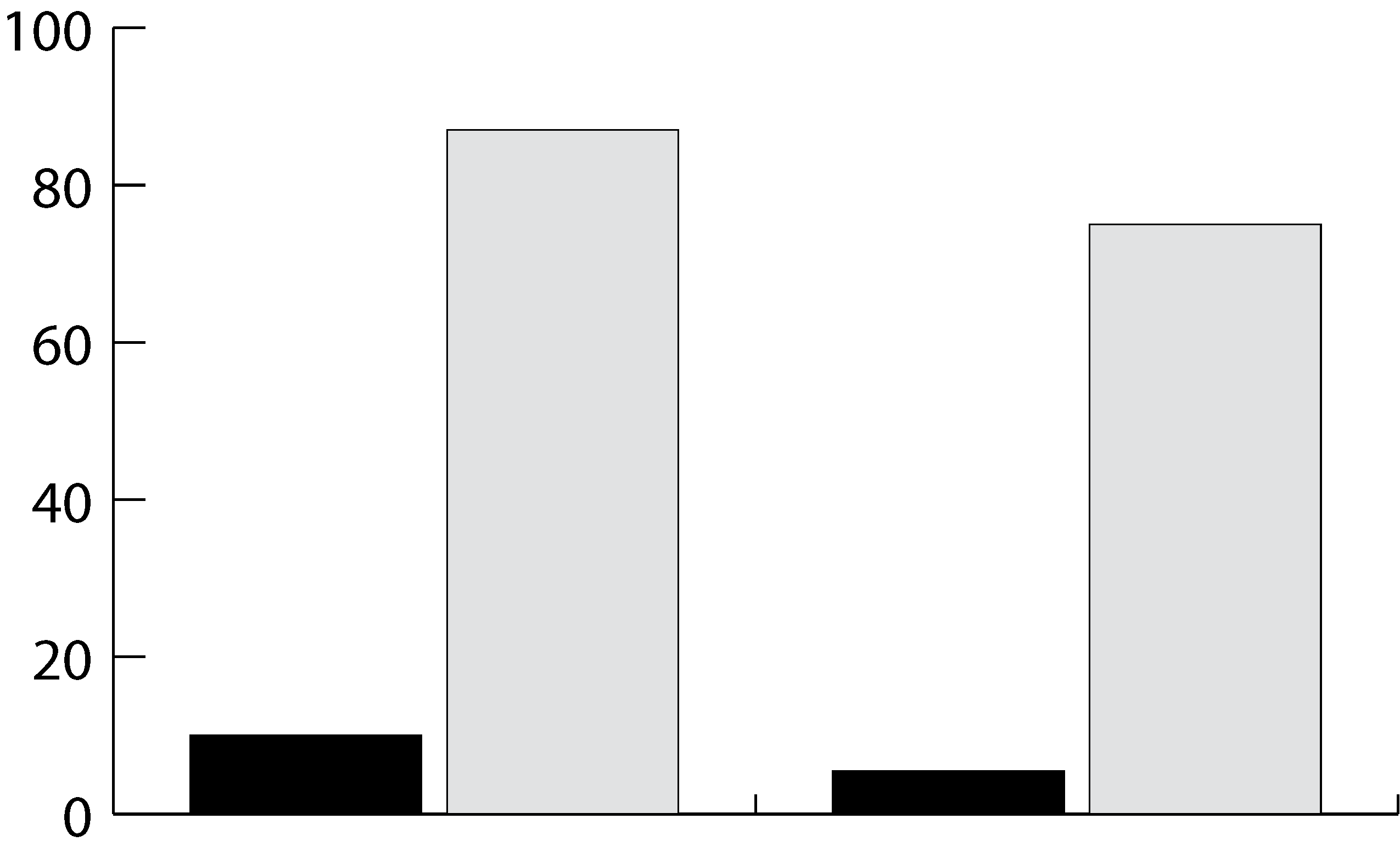
The numbers tell a compelling story. Banks have halved their CRE lending from 10% in 2009 to 5.5% of total assets today. Meanwhile, major banks’ share of total CRE lending by deposit-taking institutions has fallen from 87% to 75%. The estimated value of Australia’s private credit assets under management was roughly $200 billion at the end of 2024, up from $188 billion the year before. The true size of the market remains difficult to quantify, but the trajectory is unmistakable.
“In one word, it’s huge opportunity,” Bannister said. “Going forward, it’s also going to be essential to unlocking growth in this country.” He pointed to housing supply as a case study. “It simply won’t be built unless private credit plays a [significant role].”
International comparisons prove instructive. With market penetration of private credit within total CRE lending at substantially higher levels in the US, Australia’s market is not yet fully mature, and the share is likely to rise further.
Yet outside the industry, misconceptions persist. The mainstream media tend to portray private credit as shadowy, a repository for loans that banks refuse. The reality, according to those around the table, differs substantially. Private credit lenders often compete directly with banks for the same clients, offering additional flexibility rather than serving as lenders of last resort.
“Generally, they’ve got a bank offer and a private credit offer, and they’ll choose whether they want the additional flexibility that it can often bring,” Bannister said.
Scahill emphasised that definition matters. Private lenders who raise capital through sophisticated means face numerous hurdles and carry less risk than opportunistic entrants attracted by market opportunity. From an aggregator’s perspective, controlling which brokers access which lenders becomes critical.
“This is a space where uneducated or inexperienced brokers can get poor results for customers,” Scahill said. “I think this is the most important area to ensure proper participation standards.”
Trianta sees tremendous opportunity for clients to complete transactions or undertake multiple projects without tying up excessive equity. But transparency remains paramount, particularly when comparing direct bank offers with private credit alternatives. Currently, without side-by-side comparisons, clients may not fully understand the cost differences.
“It probably needs to change a little bit more, to be transparent around costs and the fees associated with that,” Trianta said.
Lo Surdo rejected the shadowy industry characterisation entirely, pointing out that non-bank lending has existed for decades.�“It’s been around for a long time,” he said. “La Trobe’s been around for 75 years … we’ve seen pretty significant growth in the post-GFC period. I expect that growth will continue, because what private credit or non-bank lending is doing is solving a�[need] in the market.
“It’s really critical, actually, with an increasingly constrained banking sector, that non-bank lending and private credit is available and flowing and can meet customer solutions,” Lo Surdo added. “We’re all here about solving customer problems.”
He noted that even ASIC doesn’t know the true size of the�private credit market. “They’ve come out publicly and said that.”
ASIC’s recent increased oversight of private credit generated mixed reactions from the participants. Most see regulatory review as inevitable and potentially beneficial, though concerns about overreach and unintended consequences temper enthusiasm.
“A review in this space will likely lead to a net positive result,” Bannister said. “It’s needed.” He drew parallels with the broker industry’s experience with the 2017 banking royal commission scrutiny and the subsequent introduction of the best interests duty.
“As much as at times [reviews] can be viewed as daunting … it really showcased the core value proposition, showcased the professionalism, the governance and compliance around what brokers do, and therefore it built a lot of trust,” Bannister said. “I think that we can probably expect a similar outcome out of [scrutiny in] the private credit space.”
Whether review will bring additional regulation remains uncertain. “We don’t think there needs to be additional regulation, but we would certainly encourage greater transparency and oversight in the sector.�I think that’s important and something we would welcome,” Bannister said.
He predicted initial consolidation as appropriate hurdles eliminate marginal players, adding, “That’s not necessarily a bad thing.”
Gortan wants ASIC to address businesses purporting to be lenders but in fact operating as brokers. “A lot of borrowers get caught out where they’re effectively signing engagement documents with people that aren’t actually lenders, that then go and broker the deal with someone else,” he said.
“I’ve seen lenders … say that they’re issuing a letter of offer and then go and slap caveats on people’s properties when they’re not lenders.” Gortan said this results in unscrupulous demands for large fees.
“If any of that that can get weeded out, I think it would be an absolutely great thing.”
Hall’s first question when approached by new market entrants is often: which lawyers do you use? The integrity of loan management and enforcement frequently rests with legal firms. “There are a few law firms ... [that] if they’re linked to the private lenders [in a deal], we just won’t engage.”
Lo Surdo noted that active commercial brokers know which lenders maintain good reputations and which don’t. Fulfilling obligations to customers requires distinguishing between lenders with sound practices and those with poor track records. “To discharge the obligation that you have to your customer … we [need to be] educated, understand the product, and capable of distinguishing between those lenders that perhaps have less scrupulous practices [and those that don’t].”
With new entrants trying to get into the market, broker reputation is key. “Your reputation rests upon the performance of the lender that you introduce to your customer,” Lo Surdo said. “Getting that right is really, really important.”
He agreed an ASIC review would produce net positive outcomes despite any disruption, particularly to lenders who shouldn’t operate in the sector. “I think there will be some pain in the short term and probably pain for those lenders that perhaps shouldn’t be in the sector. I see that as a positive thing.”
Trianta welcomes the prospect of consolidation. He said he gets multiple approaches weekly from new lenders looking to enter the market. “[Some] just collect commitment fees or mandates without doing much work, and I think that’s giving the industry a little bit of a bad name.”
Enconniere worries about opportunity cost. “You only need to look at the US and the UK, where private credit makes up a predominant portion of construction finance, for example, which is obviously assisting the housing supply there,” he said. “Given our need for housing here in Australia, we need to be mindful of the impact of any additional regulation that materially disrupts or hampers private credit’s ability to navigate financial markets. It could have a meaningful impact on much-needed housing supply.”
Scahill suggested the industry could influence outcomes by demonstrating existing self-governance standards. “The better the job we can do demonstrating to ASIC and regulators that there is a high level of self-governance already, the greater the likelihood that the regulation will be fit for purpose,” he said.
Experience and track record form the foundation of responsible commercial lending. Customers want brokers with proven expertise, and brokers want lenders with solid reputations.
“First is how [lenders] behave from an ethics point of view,” Bannister said. “Do they act fairly when things don’t go as planned? And fundamentally, how do they behave through the cycle?”
When money is abundant, lender behaviour changes. “Where there’s an abundance of liquidity in the market, you see practices that don’t appear to be sustainable,” Bannister said. “So then it becomes a question about whether that’s the right thing for that client at the time … [even] if it’s very attractive today, will that still look attractive in 12 months’ time if things turn?”
La Trobe Financial is Australia’s premier alternative asset manager and a proven and trusted investment partner for institutional and retail investors, with c. A$20 billion in assets under management. We believe that property and homeownership are the foundation of wealth creation and achieving financial independence. This is why we have created our broad product range, offering lending solutions to suit your needs at every life stage, from buying your first home through to building your business and maximising your SMSF and retirement income.
Find out more
Cory Bannister is senior vice president and chief lending officer at La Trobe Financial. Bannister has over 20 years’ experience in financial services and has held a number of positions across credit and distribution since joining the business in 2000. As CLO, Bannister is focused on managing substantial wholesale and retail investors. He holds diplomas in mortgage lending and business accounting and resides in Melbourne.
La Trobe Financial
Cory Bannister
Jeremy Enconniere is based in Melbourne in La Trobe Financial’s Real Estate Credit Finance Division. As a specialist commercial analyst, he manages major client and broker relationships across Australia, specialising in commercial credit and development finance. He has over seven years’ experience in banking and financial services, including the mortgage industry across lending, distressed asset management and credit within the non-bank sector. His deep understanding of complex debt structuring helps him achieve the best outcomes for La Trobe Financial’s clients.
La Trobe Financial
Jeremy Enconniere
Jean-Pierre ‘JP’ Gortan is the co-founder and managing director of Simplicity Loans & Advisory, with over 20 years’ experience in banking and commercial lending. In 2023 he was named Westpac Australian Broker of the Year and Commercial Broker of the Year at the Australian Mortgage Awards. Since founding Simplicity in 2017, JP has overseen the company’s growth to billions in settled lending volume, building a reputation for delivering complex funding solutions across industries. Beyond transactions, he is passionate about mentoring emerging talent, shaping the next generation of brokers and driving innovation across the commercial finance landscape.
Simplicity Loans & Advisory
Jean-Pierre Gortan
Chris Hall is the managing director and founder of Blue Crane Capital. He has extensive experience working at major financial institutions and with the non-bank lending channel, with expertise in commercial, construction, SMSF property and residential finance. With more than $3.5 billion worth of lending originated since the company’s inception in 2017, Hall has deep knowledge of products and relationships in the capital markets, and proven ability to source and structure capital for clients across many property asset classes.
Blue Crane Capital
Chris Hall
Share


The diversification dilemma
Published 17 Nov 2025


Advertising
Authors
E-newsletter
Contact Us
Contact Us
Australian Broker Talk
Events
White papers
Webinar
Australian Broker Talk
Resources
TV
Sector Focus
Power Panel
Independent Feature
Executive Team Profile
Exclusive Leader Profile
Business Update
Business Focus
Big Deal
Premium Content
Technology
Reverse Mortgages
Investment Loans
Specialist Lending
SME
Commercial
Speciality
Best In Mortgage
News
News

RSS
Sitemap
About us
Conditions of Use
Privacy policy
Terms & conditions
Firms
People
Copyright © 2025 KM Business Information Australia Pty Ltd


Petro Trianta
Podium Money

Stephen Scahill
Loan Market
Domenic Lo Surdo
Stamford Capital
Petro Trianta, founder and director at Podium Money, is consistently ranked among Australia’s top five commercial finance brokers within the Loan Market network. With over 20 years in banking and finance, he has built Podium Money into a leading brokerage supported by a team of expert brokers and client service specialists. Trianta excels at navigating complex lending scenarios with insight and a personalised approach, focusing on long-term relationships. Known for his approachability and dedication, he is committed to delivering tailored financial solutions that regularly exceed client expectations.
Podium Money
Petro Trianta
Since joining Loan Market in 2010, Steve Scahill has fulfilled a number of roles and is currently group executive, commercial finance. Identifying the underinvestment in support for commercial brokers, Scahill established a team of state commercial specialists and a dedicated commercial finance technology platform. His vision is for brokers to be able to service their clients’ full financial needs – from home loans to business and commercial property lending – by providing them with the necessary tools and support to thrive in the market.
Loan Market
Stephen Scahill
Domenic Lo Surdo brings more than 30 years of experience across property investment, development and finance. His career began in institutional banking at ANZ before he moved to Gresham Partners, where he gained extensive expertise in property funds management. As co-founder and group executive chairman at Stamford Capital, Lo Surdo provides guidance across the business while also managing key client and lender relationships. Recognised for his industry leadership, he joined the board of CAFBA in 2019 and was appointed president in 2023. His depth of knowledge and passion for building lasting partnerships continue to influence both Stamford Capital and the broader commercial finance industry.
Stamford Capital
Domenic Lo Surdo
Strategic thinking versus transaction processing
The qualification question
Almost a third of mortgage brokers also writing commercial loans


Apr 24-Sep 24
1,000
2,000
3,000
4,000
5,000
6,000
7,000
8,000
Oct 19–Mar 20
Oct 23-Mar 24
Apr 23-Sep 23
Oct 22–Mar 23
Apr 22–Sep 22
Oct 21–Mar 22
Apr 21–Sep 21
Oct 20–Mar 21
Apr 20–Sep 20
4,486
4,539
4,727
5,268
5,369
6,118
5,864
5,654
6,755
7,023
Number of brokers
31.5
30.7
30.1
28.5
31.8
28.8
28.8
27.9
27.5
27.3

Source: MFAA Industry Intelligence Service 19th Edition report
Private credit’s expansion
Regulatory reckoning
“We don’t think there needs to be additional regulation, but we would certainly encourage greater transparency and oversight in the sector”
Cory Bannister,�La Trobe Financial
From left: Dominic Lo Surdo, Stamford Capital; Petro Trianta, Podium Money; Stephen Scahill, Loan Market; Cory Bannister, La Trobe Financial; Jean-Pierre Gortan, Simplicity Loans & Advisory; Chris Hall, Blue Crane Capital; Jeremy Enconniere, La Trobe Financial

Responsible lending in practice
Trianta emphasised knowing customers deeply: “[Brokers should] get out, actually walk their premises and check it out to see what they actually do.”
Gortan’s firm follows a rule of thumb – present clients with at least three options, potentially including bank, non-bank and private credit alternatives.
This is a better practice than offering just one option, he pointed out. “That’s really not allowing the client to understand what’s available,” Gortan said. “They [may want private credit] ... or they might want to go down the path of trying to go through a bank because they’re happy to invest the time.”
Hall noted that most brokerages maintain frameworks for evaluating transactions. Because his firm operates in the residential space, those processes inform commercial practices. “We do try to implement similar sorts of guidelines on the commercial side.”
Lo Surdo stressed treating clients as clients rather than transactions: “I think if a business has that in their DNA, then they’ll have that client for the long term, because it means you’re actually interested in acting in that client’s best interests. I’m not suggesting for a minute we need a best interest duty in the commercial space, because I don’t think we do. But the good commercial brokers will always take a very long-term view of their customers.”
Looking ahead to 2026
Optimism pervaded the discussion about 2026 prospects. Multiple factors align favourably: stabilising construction costs, easing planning restrictions, supportive interest rate environments, strong liquidity and growing broker market share. The private credit sector appears particularly well positioned for the recovery phase.
Over the longer term, greater market depth may enable providers to offer larger and more sophisticated loans while achieving greater diversification across sectors.
Enconniere said Victoria, where he is based, is “currently on the up, [while] Australia has widely benefited from increases across the board in property prices … the commercial space, warehouses, commercial construction, industrial properties, long-term assets have all seen a pretty good uptick. And to be honest, I think that will probably continue.”
“The better the job we can do demonstrating to ASIC and regulators that there is a high level of self-governance already, the greater the likelihood that the regulation will be fit for purpose”
Stephen Scahill, Loan Market
Hall agreed. “I think there are tailwinds in the market and a lot of liquidity to lend,” he said. “We’re starting to see the majors coming back and doing some things that they probably haven’t done historically. I think that’s them looking over the shoulder at the private credit space.”
He reflected on how perceptions have shifted. “When I started the business eight years ago, private credit was a little bit of the ugly cousin,” Hall said. “But I think now it’s either a complement to the major banks or it’s a competitor. We’re seeing a lot of staff from the majors jumping across to the private credit space. I’m very excited about the next 12 to 24 months.”
Bannister has also seen movement. “We’re seeing a wave of commercial bankers exiting the banks to become brokers, via the banker-to-broker programs that aggregators have in place. I think [they] are a great addition,” he said. “Not only is it helpful to source additional deal flow, but it ensures the standard of the brokers that are writing commercial remains high and helps spread the load.”
Gortan’s construction-heavy business had endured a three- or four-year lull. Projects had sat on hold with non-working feasibilities. However, momentum is building. “I feel as though the next 18 to 24 months is going to be a bit of a [strong] patch,” he said. “A lot of the legislation in New South Wales has been kind of loosened around planning, and a lot of projects that didn’t work before now do. There’s also a stabilisation of construction costs, which I think allows developers to kind of plan forward … feasibility that didn’t work before now is starting to work.”
Source: Knight Frank The Rise of Real Estate Credit in Asia-Pacific – Bridging the Gap report
Portion of total lending assets allocated to commercial real estate (CRE) at traditional banks
2025
2009
20
40
60
80
100
10%
87%
5.5%
75%
Banks take more of a back seat on commercial real estate lending
Major banks’ share of total CRE lending by all deposit-taking institutions
Flexible non-bank terms add another positive factor. “I think we’ll see a significant amount of growth, a lot of product delivered into the market, which for that housing problem is a really good thing,” Gortan said. “This is going to be a great time to be a specialist, especially in that construction space.”
Bannister shares this enthusiasm. “We equally see 2026 as a period of significant opportunity and growth in the commercial space,” he said. “The rate cycle is supportive. It’s helpful for end values, which help get projects out of the ground and make feasibilities work. It also helps with commercial property values, which, if they are not already out of the bottom, will start to turn upwards.”
Lo Surdo believes residential markets “are heading for a really strong couple of years. You can’t pick up a paper without some article being written about Australia being undersupplied in homes … there’s plenty of liquidity in market … there’s a bit more confidence in the end buyers,” he said. “We’re seeing off-the-plan sales sort of tick up. We’re also starting to see architects and planners get busy again at the front end.”
Geographically, southeast Queensland has been booming while Victoria has stagnated – signalling an imminent revival. “Victoria, to me, looks like a place that’s going to be very active,” Lo Surdo said. “New South Wales is probably somewhere in between. South Australia and WA are pretty active as well. I’m really bullish about the resi sector.”
“A lot of projects that didn’t work before now do. There’s also a stabilisation of construction costs … feasibility that didn’t work before now is starting to work”
Jean-Pierre Gortan, Simplicity Loans & Advisory
In commercial markets, limited transactional activity over recent years reflects valuation gaps between buyers and vendors, Lo Surdo added. “With the interest rate environment that we’re in, there’ll be a little bit more transactional activity, and that’s a good thing,” he said. “It’s a good thing for brokers and a good thing for lenders. It means that there’s an opportunity to at least engage with the market and engage with those potential buyers.”
Trianta reported strategically targeting former bankers with strong construction expertise. New hires starting soon at his firm have tired of bank constraints. “Victoria is going to help new projects get off the ground. And obviously with build costs stabilising, it’s a pretty positive outlook for the Victoria market,” he said.
Enconniere draws connections between commercial market performance and liquidity levels. Australian liquidity from all lenders sits at an all-time high, partly driven by institutional interest in alternative asset classes as corporate bonds widen. Private credit benefits from this capital inflow.
“As long as that stays on course, I think that will translate into more volume,” Enconniere said. “More liquidity in market generally means cheaper cost of capital, which then fuels more growth.”
Opportunity beckons for those with proper preparation, experience and judgement. The road requires navigation between competing demands: serving clients effectively while managing complexity; embracing private credit’s potential while advocating for appropriate oversight; pursuing growth while maintaining standards.
Those who succeed will be brokers who understand that commercial lending rewards strategic thinking over transactional processing, long-term relationships over quick deals, and continuous learning over static knowledge.
La Trobe Financial disclaimer: The answers given are the authors’ personal views and do not constitute personal financial advice. The authors have not considered your personal financial circumstances or objectives. We recommend you seek the assistance of a finance professional.
Proportion of brokers (%)
Show/hide