Commercial opportunities hiding in plain sight
IN Partnership with

More
FOR MORTGAGE BROKERS looking for their next source of growth, the opportunity may not necessarily lie in finding more clients. It could come from having a different conversation with the clients they already know.
That is one of the lessons emerging from Wave Money’s move into small-ticket commercial lending and from two recent deals written by Mark Petterwood of Astute Financial Geelong.
Petterwood has been broking since establishing Astute Financial Geelong with his wife in 2007. Today, the business writes around $65 million annually across residential and commercial lending, including approximately $5 million to $10 million in commercial business.
Much of its client base originates from accountant referrals and includes small business owners and self-employed borrowers. But what is particularly interesting, Petterwood says, is how those clients’ needs have evolved over time.
Clients who came to him to buy their first homes a decade ago are now buying second and third properties, building investment portfolios and looking for new opportunities.
Rather than treating each transaction in isolation, Petterwood focuses on understanding where clients are today and where they want to be in five or 10 years. That philosophy recently uncovered two very different commercial lending opportunities.
Wave Money is an Australian independently owned, non-bank lender focused on helping brokers deliver solutions to borrowers whose needs may not be met by traditional lenders. Founded by a team of seasoned mortgage and finance experts, Wave Money leverages deep industry knowledge and experience to deliver exceptional service and positive outcomes for its broker partners and their clients. The business combines direct access to experienced sales and credit teams with a common-sense approach to lending across nuanced borrower scenarios. By combining technology with human discernment, Wave Money aims to be a trusted partner for brokers navigating increasingly complex borrower lending needs.

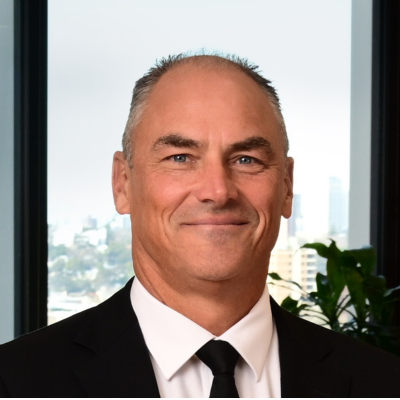
Mark Petterwood, Astute Financial Geelong


Scenario 1: From paying rent to owning the premises
The first involved a long-standing client who operates a successful fish and chip business in Geelong.
The client had been renting the commercial premises from his father for many years, paying $4,000 per month. With his father approaching retirement and looking to free up capital, an opportunity emerged for the son to purchase the property.
The challenge was finding the right way to demonstrate servicing. The client’s financials did not provide sufficient income to support the required borrowing under a conventional full doc assessment, so Petterwood explored an alternative documentation solution.
Share


“A lot of brokers are scared of doing commercial transactions, and they really shouldn’t be because most commercial transactions are not complicated”
“There’s [a] wonderful commercial opportunity inside existing relationships. You don’t need to be going out there trying to find new relationships”
Wave Money’s John Flavell and Astute Financial Geelong’s Mark Petterwood reveal how brokers can unlock commercial opportunities already sitting within their existing client base
Published 21 Sep 2026


Wave Money’s accountant verification offered another pathway. Rather than requiring the accountant to declare a specific income figure, the verification focused on the accountant understanding the client’s financial position and being comfortable that the borrower could meet the proposed loan commitment.
“It’s a much more palatable letter for accountants to sign,” Petterwood says.
There was another compelling piece of the scenario: the proposed loan repayment was only around $100 per month more than the rent the client had already been paying. The related-party transaction ultimately resulted in an unconditional approval of $480,000.
For Petterwood, the process was notable not only because of the outcome, but because issues that arose during assessment could be discussed and worked through directly with Wave Money’s credit team.
Making commercial feel more like residential
For Wave Money founder and managing director John Flavell, the scenario illustrates much of the thinking behind the lender’s move into small-ticket commercial.
Wave Money was hearing from brokers that the same borrowers they were helping with residential lending – particularly self-employed clients and property investors – were increasingly presenting commercial lending opportunities.
The challenge was that commercial lending could quickly become complex. Traditional commercial assessment can involve detailed examination of business financials, interest coverage ratios and shorter loan terms, creating a very different experience from the residential lending process brokers use every day.
Wave Money deliberately set out to simplify that. Its approach is to use the same underlying servicing philosophy it applies to residential lending for straightforward commercial scenarios, while substituting commercial property as the security.
The proposition includes maximum loans of $1.3 million, up to 80% LVR and terms extending to 30 years across eligible metropolitan commercial properties.
Just as importantly, Flavell says brokers can engage directly with the people assessing and making decisions on their transactions, allowing issues to be workshopped from scenario through settlement.
Scenario 2: A first investment – with a difference
Petterwood’s second recent Wave Money deal could hardly have involved a more different borrower.
The client was a 19-year-old second-year apprentice looking to purchase his first investment property, a commercial property worth around $480,000. The opportunity had initially been brought to Petterwood by the young man’s father, who was prepared to gift the balance of the purchase funds. On the surface, it was the type of scenario a broker might quickly dismiss.
But the property already had an established commercial tenant, with rental income covering the proposed loan repayments. The tenant also had options to extend the lease, while the young borrower had future earning potential as he progressed through his apprenticeship.
Servicing remained tight, and the transaction presented several challenges during assessment, including the company structure and a valuation that returned a lower rental figure than anticipated.
Rather than ending the transaction, Petterwood worked with Wave Money’s credit team to find a way forward. The proposed loan was ultimately reduced by around $15,000 to approximately $335,000 and received unconditional approval.
The experience reinforced for Petterwood that commercial lending need not automatically mean a more complicated process.
The opportunity hiding in your client base
The two transactions also demonstrate a broader opportunity Flavell believes brokers should be considering.
Since launching Small Ticket Commercial, Wave Money has been hearing from brokers that there is more commercial potential within their existing customer bases than they had anticipated, particularly among self-employed borrowers.
For business owners, one of the most obvious opportunities is the premises from which they already operate. A client who has successfully operated a business from the same location and paid rent for years may reach a point where purchasing those premises becomes the logical next conversation.
Existing residential property investors represent another potential source of opportunity as they consider commercial property as another asset class.
For brokers, that means commercial lending does not necessarily require building an entirely new database of commercial clients.
Three ways to verify income
Wave Money has also designed its Small Ticket Commercial proposition to accommodate different borrower circumstances through three income verification pathways.
Full Doc uses the same servicing approach Wave Money applies to residential mortgages, assessing the individual’s ability to service the debt. Alt Doc provides alternatives for self-employed borrowers, including accountant verification, BAS statements or business banking statements. The third option, Lease Doc, provides another potential pathway for commercial property investors.
When the property can service the debt
Under Wave Money’s Lease Doc solution, an eligible commercial investment property with at least two years remaining on its lease can potentially be assessed using the net rental income generated by the property.
Wave Money takes the rental income and deducts relevant property outgoings to establish the net amount received by the borrower. If that income is sufficient to cover the mortgage repayments, servicing can be assessed against the lease without needing to assess the individual borrower’s personal income and outgoings in the same way.
For investors who may have equity available but have reached the limits of their personal borrowing capacity under traditional servicing models, Flavell says Lease Doc can provide another way to consider a commercial investment opportunity.
You don’t have to become a commercial specialist
For residential brokers who remain hesitant about stepping into commercial, Petterwood’s advice is simple: Don’t assume a deal is too difficult before exploring it.
The commercial transactions sitting within a residential broker’s client base are not necessarily complex developments or multimillion-dollar business transactions. Often, Petterwood says, the conversation can be as straightforward as a client saying: “I want to buy the shop that I’m working out of.”
There is also a client-retention argument for broadening that capability. If an existing client has a commercial lending need that their broker cannot help them solve, they may need to find another adviser, potentially putting the broader relationship at risk.
Petterwood encourages brokers to expand their knowledge, use the resources available through their aggregator, speak to brokers with commercial experience and, importantly, engage with lender BDMs to workshop scenarios before submission.
His own approach includes discussing deals with Wave Money’s broker relationship team before lodging them so the parties can consider the structure and potential issues together. That support can help remove one of the biggest barriers preventing residential brokers from exploring commercial lending: confidence.
Because, as the experiences of Petterwood’s two clients demonstrate, the next commercial opportunity may not require finding a new customer at all. It may simply require recognising a new opportunity with a client you already know.
John Flavell, Wave Money
Find out more
PODCAST EXCLUSIVE: �Turning existing clients into commercial opportunities
Wave Money’s John Flavell and broker Mark Petterwood unpack two recent commercial deals and explain how brokers can uncover new opportunities within their existing client relationships and portfolios