The complex deals brokers could be overlooking
IN Partnership with

More
FOR MORTGAGE BROKERS, there is an important distinction between a deal that genuinely doesn’t work and one that simply doesn’t fit the way a particular lender assesses it.
�That distinction is becoming increasingly important as borrowers’ financial lives become more complex. Self-employed clients, variable income, multiple investment properties, trusts and companies, joint debts and changing personal circumstances can all create challenges when a scenario is assessed through a conventional lending model.
�But Wave Money founder and managing director John Flavell says brokers shouldn’t necessarily assume a difficult scenario is a dead deal.
�“If it makes sense, we will endeavour to find a way to get a solution,” Flavell says.
It starts with servicing
Servicing is often where a deal succeeds or fails.
�Flavell says borrowers typically aren’t approaching a lender with large amounts of unused borrowing capacity. Whether purchasing a home or another investment property, the question is often how much they can access.
�That makes the way servicing is calculated critical.�
Wave Money is an Australian independently owned non-bank lender focused on helping brokers deliver solutions to borrowers whose needs may not be met by traditional lenders. Founded by a team of seasoned mortgage and finance experts, Wave Money leverages deep industry knowledge and experience to deliver exceptional service and positive outcomes for its broker partners and their clients. The business combines direct access to experienced sales and credit teams with a common-sense approach to lending across nuanced borrower scenarios. By combining technology with human discernment, Wave Money aims to be a trusted partner for brokers navigating increasingly complex borrowing needs.

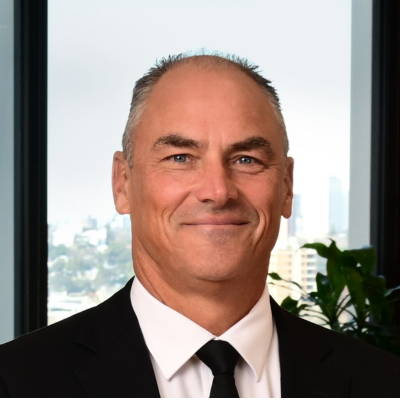
John Flavell, Wave Money

Wave Money uses a net servicing ratio rather than applying a debt-to-income cap. It also assesses debt held with other financial institutions using actual repayments, while applying a 2% servicing buffer to the Wave Money facility.
�Living expenses are published within its servicing calculator, giving brokers visibility over the figures that will be used before submitting the deal.
Share


“If it makes sense,�we will endeavour to find a way to get a solution”
Some of the best lending opportunities may be hiding in deals brokers have already ruled out. John Flavell explains why they deserve a second look
Published 19 Oct 2026


Another potentially significant difference is the treatment of credit cards.
�Many self-employed borrowers use high-limit cards for business expenses, even though they clear the balance each month. Where a borrower can demonstrate their credit card has been paid in full each month for the previous three months, Wave Money can exclude the card limit from servicing.
�Flavell says the effect can be significant. A $100,000 card limit, for example, could reduce calculated borrowing capacity by around $450,000–$500,000 under an assessment that assumes the facility is fully drawn and applies a minimum monthly repayment.
�“It all adds up. It makes a massive difference,” he says.
Looking at the income borrowers actually earn�The other side of servicing is income.
�Flavell argues that the way Australians earn money has changed. Bonuses, commissions, overtime, contract work and shorter tenure with an employer are increasingly part of a borrower’s income story.
�Wave Money seeks to recognise 100% of sustainable income where the circumstances support it, rather than automatically shading particular types of income.
�The same philosophy extends to self-employed borrowers.
�A successful business owner may have a sound business, strong equity and the capacity to service a loan, but not have their latest financial statements or tax returns completed.
�For those borrowers, Wave Money offers several alternative methods of income verification, including its Accountant’s Declaration method, BAS statements and business banking statements.
�Under the Accountant’s Declaration approach, the accountant isn’t being asked to certify a particular income or profit figure. Instead, they confirm that, based on their knowledge of the client and business, the borrower can meet the proposed loan commitment together with their existing obligations without undue hardship.
�For Flavell, these aren’t unusual cases.
“That’s everyday bread and butter, Wave Money’s sweet spot lending,” he says.��
When complexity is structural
Complexity isn’t always about income.
�A borrower may have investments held across companies and trusts, personal guarantees associated with other entities or a jointly held debt for which the borrower is only meeting part of the repayment.
Flavell says these are precisely the types of scenarios where human credit assessment can make a difference.
�Where a borrower has obligations associated with separate companies or trusts, for example, an accountant may be able to verify that those entities are meeting their own commitments. That can allow Wave Money to isolate those commitments rather than automatically bringing all the debt into the borrower’s servicing assessment.
�Similarly, where a borrower can demonstrate that they and another party are each meeting an agreed share of a joint debt, Wave Money can consider the borrower’s relevant share rather than automatically attributing the entire liability to them.
�The objective, Flavell says, is to understand what is actually happening rather than allowing complexity alone to stop the assessment.�
Would Wave Money look at this?
The scenarios brokers encounter don’t always fit neatly into policy categories.
�A business owner who has rented their premises for years may have an opportunity to buy the property instead. Flavell says brokers with self-employed clients should be looking within their existing customer base for these conversations, with Wave Money taking a similarly straightforward approach to suitable small commercial property as it does to residential lending.
�A borrower carrying ATO or business debt may have substantial equity available to restructure that debt over a longer-term facility, potentially reducing the cash-flow pressure on their business.�
A builder or developer may have used private lending for a specific project and now need to refinance it into a sustainable long-term facility once the development is complete.
�“Others run away because they don’t seek to understand,” Flavell says. “We seek to understand and we provide solutions.”
�Then there are borrowers whose complexity comes from a change in life circumstances.
Wave Money regularly sees clients going through separation or divorce who want to retain the family home but now need to service the debt on a different income profile. Returning to full-time work, child support, shared care arrangements and even boarder income can all form part of that assessment.
�In one scenario Flavell discussed, recognising income from a spare bedroom helped a recently separated borrower demonstrate sufficient servicing to retain her home.
�
Before ruling the deal out
Across all these scenarios, Flavell says the common denominator is conversation. For brokers, that means being able to discuss the scenario with the people who will ultimately help make the credit decision.
�
Wave Money’s broker relationship managers work directly with its credit team, with the scenario managed from the initial conversation through to settlement.
�“When it’s complicated, when it’s not right in the middle of the fairway, where it’s nuanced, then you need a lender who’s going to take a common-sense approach to credit,” Flavell says.
�His message to brokers is simple: if there is a deal on the desk that makes sense but doesn’t fit neatly within another lender’s servicing model or policy, don’t automatically rule it out.
�Pick up the phone and have the conversation.
Find out more
PODCAST EXCLUSIVE: �Complex Lending: Before You Rule Out the Deal
John Flavell unpacks the complex lending scenarios brokers encounter every day and explains how different approaches to servicing, income and borrower circumstances can reveal opportunities that might otherwise be missed
“What brokers say to us is if it doesn’t service with Wave Money, it probably is not going to service”
John Flavell, Wave Money